
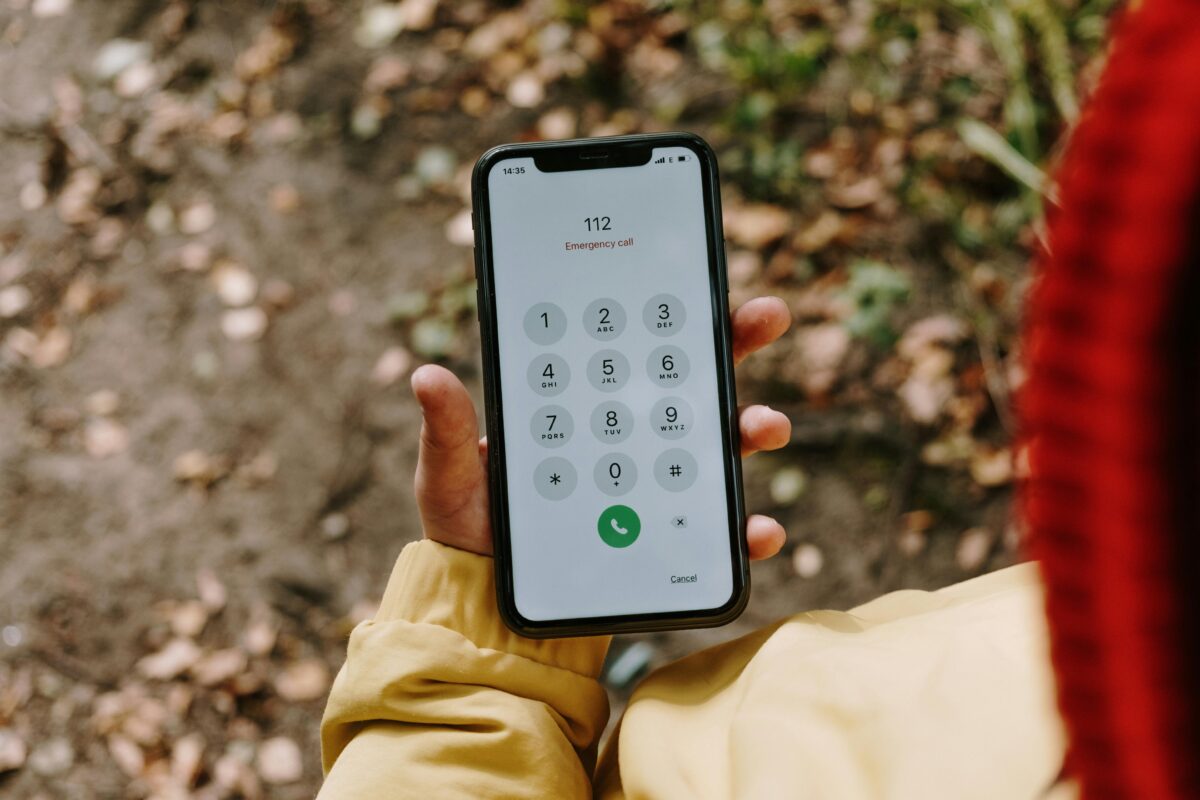
Already many years ago, I perceived statehood to be a lot about service – and that not per se as “service of a person for their country, such as with military service”, but rather in terms of a “service provider”. And in such context, instead of all them depressing notions, such as: “Every visitor to Germany has to speak German! And now excuse us, while we to go to live in Brussels, without learning any local language.” – my thoughts were more in the lines of things, such as providing Polish truck drivers local traffic news in Polish, and emergency call numbers based on language.
I then went to work for Bosch, in a department handling i.e. eCalls from cars. It was quite interesting how they set it up – as in, when e.g. a German-speaking driver has an accident in France, that the driver talks to someone speaking German, while someone from the company speaking French talks to emergency services in France. But I didn’t find that they were handling it with much care, turning the department into one of them usual call centres, where every agent is covering lines for different companies – let alone develop more. With issues ranging from management pocketing the full Inflationsausgleichsprämie (a payment, that was intended to help low income household during inflation), while us at the bottom of the salary ladder received just a third – and manager snooping on private social media profiles, to look for a reason to retaliate, for having escalated to management outside the department, that over weeks there were instances of wait time for up to half an hour, before calls from Autobahn emergency call boxes were picked up (due to only one person planned for the night shifts, to handle that, and also eCalls from cars – and once they went on break, no one in line). All the way to technical issues, such as that that the position shown for crashed vehicle, was by hundreds of kilometres off. Like, several instances, where rural emergency services e.g. in Bavaria were activated (in Germany that usually mean that a lot of volunteers come in, from the “Freiwillige Feuerwehr), who then went looking for that vehicle, reported to be near some forest or such, while the crash actually happened in Belgium – and a lot of work time in operational roles, spent with making tickets for IT, and months later, still pretty much the usual issues, and even something new inbetween.
So, I then left the company, as the private sector in general seemed to lack finesse in such regards, while lobbying for funds. E.g. all them wrist armbands, that trigger an eCall (to a private company) when detecting that the wearer may fallen down – at least the early generations don’t tell 3D coordinates, meaning that all one gets are geocoordinates to a location that may be a flat in a high-rise house – and if there is no response, totally unclear, what floor the eCall is actually from. And then you have companies calling emergency services, to pretty much just offload this setup, the companies make profit from and even get money via “Pflegeversicherung”, and the emergency services, that are often run by volunteers, are then supposed to handle that case somehow.
But the basic idea still stands, about in particular EU citizen e.g. from France and Poland, not facing a total language barrier, when they are for a short or extended period e.g. in Berlin, and so on.
Thus, eventually also needing to pretty much re-do software used in call-centers of rescue services, what I am on about, is a set of international emergency call numbers.
That is talking within Europe, phone number e.g. 505 for English-speaking operator in case of an emergency. And 506 for German, 507 for French, 508 for Spanish, and so on.
In example, Mr Macron may be privately for a visit in Berlin and suffer a medical emergency, such as from food poisoning (with these days, not many hygiene inspections going on). And calling 507, he gets someone speaking French, he can describe the symptoms to in his native tongue. This operator may sit themselves in Berlin, or possibly even in France – and in either case, the operator can stay in line, so that when local rescue services arrive, the operator can help with translation if need be.
Similarly, when it is not an SOS call, but still some help needed, one set of numbers that also has a multi-language support. In example, in Berlin a secondary emergency number these days, is 116117, to make an appointment with a doctor. And in such set, that could be 605 for English, 606 for German, 607 for French, 608 for Spanish, and so on.
And while at it, now when the patient sees the doctor, but there may happen to be a language barrier, it would seem quite practical, if the doctor could just call a number, that provides a translation service. And since the call-center of emergency services would already be staffed with persons handling two-language emergency calls, the staff could also provide translations in these cases.
Additionally, it would be nice, if every smartphone were capable to automatically transmit their location in case of an SOS call, as in simply sending an SMS to a number. Some smartphone may not have a built-in GPS receiver. But most do, and therefore the smartphone knows the exact location, which helps to cut response time quite some, and also helps to streamline the emergency response.
Specifically, instead of having to ask where the accident happened, that may sometimes result in a inaccurate description, the talk is directly about what happened. And, if there are several callers from the same place, it shows directly on a map in the call-center of the emergency services.
And as a technical expansion to that, it would be nice if there were a start-up app, that activates when an emergency call is made, to be able to transmit a picture or even video feed (with internet connectivity). Meaning that the emergency operator can ask the caller to hold their phone-camera towards a car crash, and the operator can see the scene of the accident, without the caller needing to push any button.
All in all, with just a number of operators more, and proper technical and operational setup, a multi-language support can easily run integrated within rescue services. And by that, a better service in general, while improving efficiency in response handling.